
If your swimming pool keeps losing water and you cannot figure out where it is going, guessing can become expensive quickly.
Some pool leaks are easy to spot. Others may be hidden around skimmers, returns, vacuum ports, light niches, drains, structural cracks, underground plumbing or beneath the pool deck.
That is where professional pool leak detection comes in.
At LeakXperts, the goal of a pool leak inspection is not to start repairing random areas and hope the water loss stops. The goal is to systematically narrow down the source of the water loss, determine which part of the pool or plumbing system is involved and document what is found before repair work begins.
Our Residential Pool Leak Detection service helps homeowners identify the source of unexplained water loss.
Different pools and different leaks require different testing methods. Depending on what we find during the inspection, testing may include visual inspection, dye testing, plumbing pressure testing and additional diagnostic procedures.
Here is what homeowners can generally expect during a professional pool leak inspection.
Step 1: Determine Whether the Pool Is Losing More Water Than Normal
Every swimming pool loses some water naturally. Florida heat, wind, humidity, splash-out and normal pool use can all affect the water level.
The first step is determining whether the amount of water being lost appears normal or whether the pool may have an active leak.
Warning signs can include:
- Adding water much more frequently than usual
- A noticeable drop in the water level overnight
- Water loss that continues day after day
- An automatic fill system running excessively
- A sudden increase in water usage
- Water dropping below its normal operating level
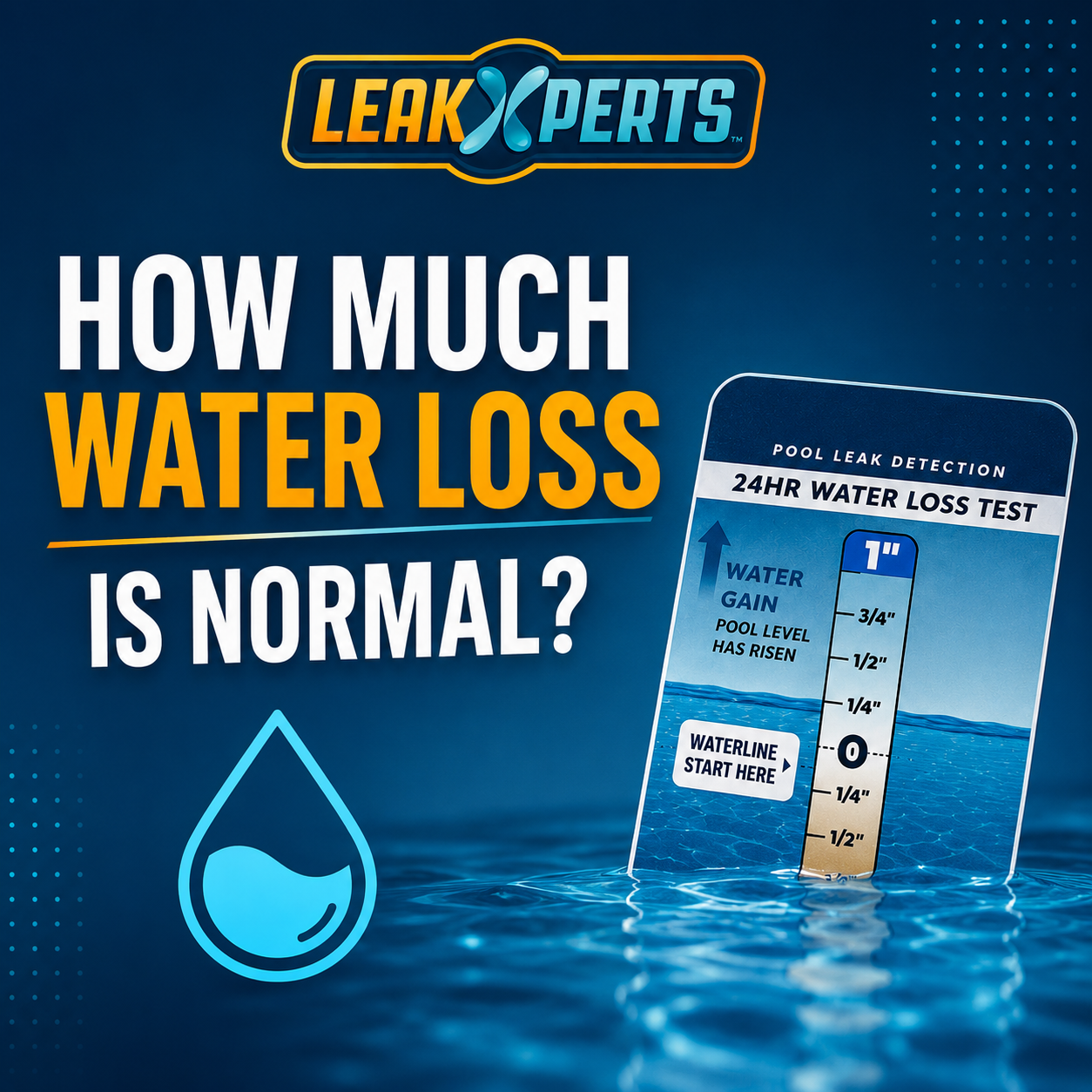
If you are unsure whether evaporation may be responsible, a bucket test can help compare the pool’s water loss with normal evaporation.
LeakXperts also offers a Swimming Pool Water Loss Calculator to help homeowners better understand how much water their pool may be losing before scheduling an inspection.
Step 2: Visually Inspect the Pool, Spa and Equipment
A professional pool leak inspection usually begins with a visual evaluation of accessible areas of the swimming pool, spa and equipment.
Depending on the pool, we may inspect areas such as:
- Pool shell
- Skimmers
- Returns
- Vacuum ports
- Main drains
- Tile and grout areas
- Structural cracks
- Light niches
- Penetrations through the pool shell
- Equipment-area plumbing
- Pumps and filters
- Visible plumbing connections
- Water features
- Attached spas
Experience matters during this stage.
A visible crack does not automatically mean that it is leaking, and a wet area around the pool does not always identify the exact source of the water loss.
The purpose of the inspection is to identify the areas that require additional testing.
Step 3: Use Dye Testing to Check Suspected Underwater Leaks
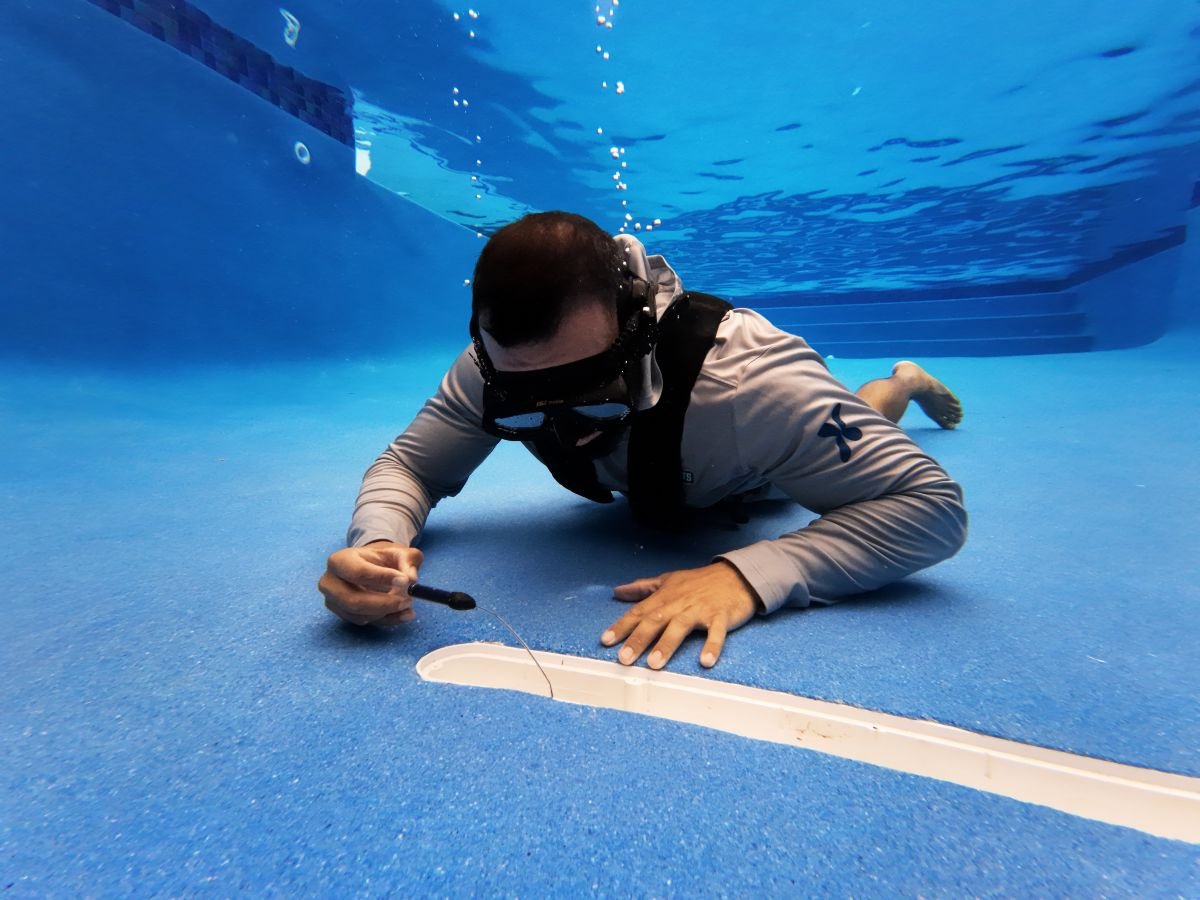
Dye testing is one of the methods used when a leak is suspected in an area below the waterline.
With the pool water kept as still as possible, a small amount of dye is introduced near the suspected leak area.
If water is escaping through an opening, the dye may be pulled toward that location.
Dye testing can be useful around areas such as:
- Skimmers
- Returns
- Vacuum ports
- Pool shell cracks
- Main drains
- Light niches
- Grout joints
- Structural penetrations
- Seals around certain pool components
- Areas where plumbing passes through the pool shell
The important part is not simply putting dye into the water.
The technician needs to know where to test, how to keep the water calm enough for accurate observation and how to interpret the movement of the dye.
This is one reason professional swimming pool leak detection can provide significantly more useful information than simply trying random DIY tests around the pool.
Step 4: Pressure Test Pool Plumbing When Needed
Not every swimming pool leak occurs inside the pool shell.
Leaks can also develop inside underground plumbing lines that cannot be visually inspected.
When a plumbing leak is suspected, pool pressure testing can be used to determine whether a particular plumbing line is holding pressure properly.
Depending on the pool, pressure testing may involve:
- Return lines
- Skimmer lines
- Vacuum lines
- Main drain plumbing
- Spa plumbing
- Water-feature plumbing
- Other circulation lines
If a plumbing line cannot maintain pressure during testing, that provides evidence that the line may be leaking.
The next step is narrowing down where along that plumbing line the leak may be located.
This is why professional Swimming Pool Pressure Testing can be so important. A leaking pipe beneath a pool deck or underground may leave little or no visible evidence at the surface.
Step 5: Narrow Down and Confirm the Source of the Leak
Finding a pool leak is often a process of elimination.
Water loss may be caused by:
- A leaking skimmer
- A structural crack
- A leaking return
- A leaking return line
- A leaking vacuum line
- A problem around a vacuum port
- A main drain leak
- Underground plumbing
- A deteriorated seal
- Equipment-area plumbing
- A leak around a light niche
- A leak around a pool-shell penetration
- Spa plumbing
- A water feature
- More than one leak at the same property
One of the biggest advantages of a professional pool leak detection service is being able to separate these possibilities before repair work begins.
Repairing the wrong area can cost considerably more than properly diagnosing the source of the water loss first.
The objective is to identify the most likely source, confirm the problem with the appropriate testing method and provide the homeowner with clear information about what was found.
What Happens After LeakXperts Finds the Leak?
Once the leak has been identified, the next step depends on exactly what is leaking and where the problem is located.
Some leaks may involve relatively localized repairs, while others may require plumbing, structural or component replacement work.
LeakXperts performs both professional leak detection and many types of Pool Leak Repair, including:
- Skimmer repairs and replacements
- Return repairs
- Return-line repairs
- Vacuum-line repairs
- Main drain repairs
- Underwater pool repairs
- Plumbing-related repairs
- Structural leak repairs
- Repairs around light niches
- Repairs around pool-shell penetrations
- Equipment-area plumbing repairs
- Other pool leak repairs
Our goal is to clearly identify and document what was found so the homeowner can understand the problem before deciding how to proceed with repairs.
That distinction is important. Leak detection should come before unnecessary repair work, not after it.
Why Professional Pool Leak Detection Matters
A small pool leak does not always stay small.
If water loss continues for weeks or months, escaping water may contribute to additional problems around the pool.
These can include:
- Higher water bills
- Increased chemical usage
- Soil erosion
- Wet or soggy areas around the pool
- Damage beneath or around the pool deck
- Equipment problems
- Plumbing damage
- Larger structural concerns
Continuously adding water may keep the pool full, but it does not solve the reason the water is disappearing.
Finding the source gives you the information needed to address the actual problem.
It can also help prevent homeowners from spending money trying to fix components that were never responsible for the leak in the first place.
What Can Homeowners Check Before Scheduling an Inspection?
There are several things a homeowner can check before scheduling professional pool leak detection.
You can:
- Mark the water level
- Perform a bucket test
- Inspect the pool for visible cracks
- Look around the skimmer
- Look around the returns
- Check around vacuum ports
- Inspect the light niche area
- Check the equipment area for visible water
- Look for consistently wet areas around the pool
- Pay attention to whether the rate of water loss changes when the pump is running or turned off
These checks can provide useful information.
For example, knowing whether water loss appears faster when the circulation system is running can give a pool leak specialist another clue about which areas may need closer inspection.
The difficulty begins when the leak is underwater, underground or somewhere inside the pool plumbing system.
That is where specialized testing becomes much more valuable.
Before your appointment, review our guide to Preparing Your Pool for Leak Detection.
When Should You Schedule a Professional Pool Leak Inspection?
Consider scheduling a professional pool leak inspection if:
- Your pool keeps losing water
- The water level is dropping faster than usual
- You are constantly refilling the pool
- A bucket test suggests more than normal evaporation
- You notice unexplained wet areas around the pool
- You see cracks or problems around a skimmer, return, vacuum port or light niche
- You suspect an underground plumbing leak
- The pool continues losing water but you cannot find the source
You do not necessarily need to know where the leak is before calling. That is the purpose of the inspection.
The sooner the cause is identified, the sooner you can make an informed decision about the proper repair.
Professional Pool Leak Detection in South Florida
LeakXperts provides professional pool leak detection throughout South Florida, including communities throughout Palm Beach and Broward counties.
Our Service Areas include:
- Boca Raton
- Deerfield Beach
- Fort Lauderdale
- Pompano Beach
- Coral Springs
- Boynton Beach
- West Palm Beach
- Jupiter
- Surrounding South Florida communities
If your swimming pool keeps losing water, you do not have to keep guessing where it is going.
A systematic pool leak inspection can help determine whether the water loss is coming from the pool structure, fittings, equipment or underground plumbing before repair work begins.
Request a professional pool leak inspection with LeakXperts.